The trade-off, priced
Twice the price, half the graft ceiling.
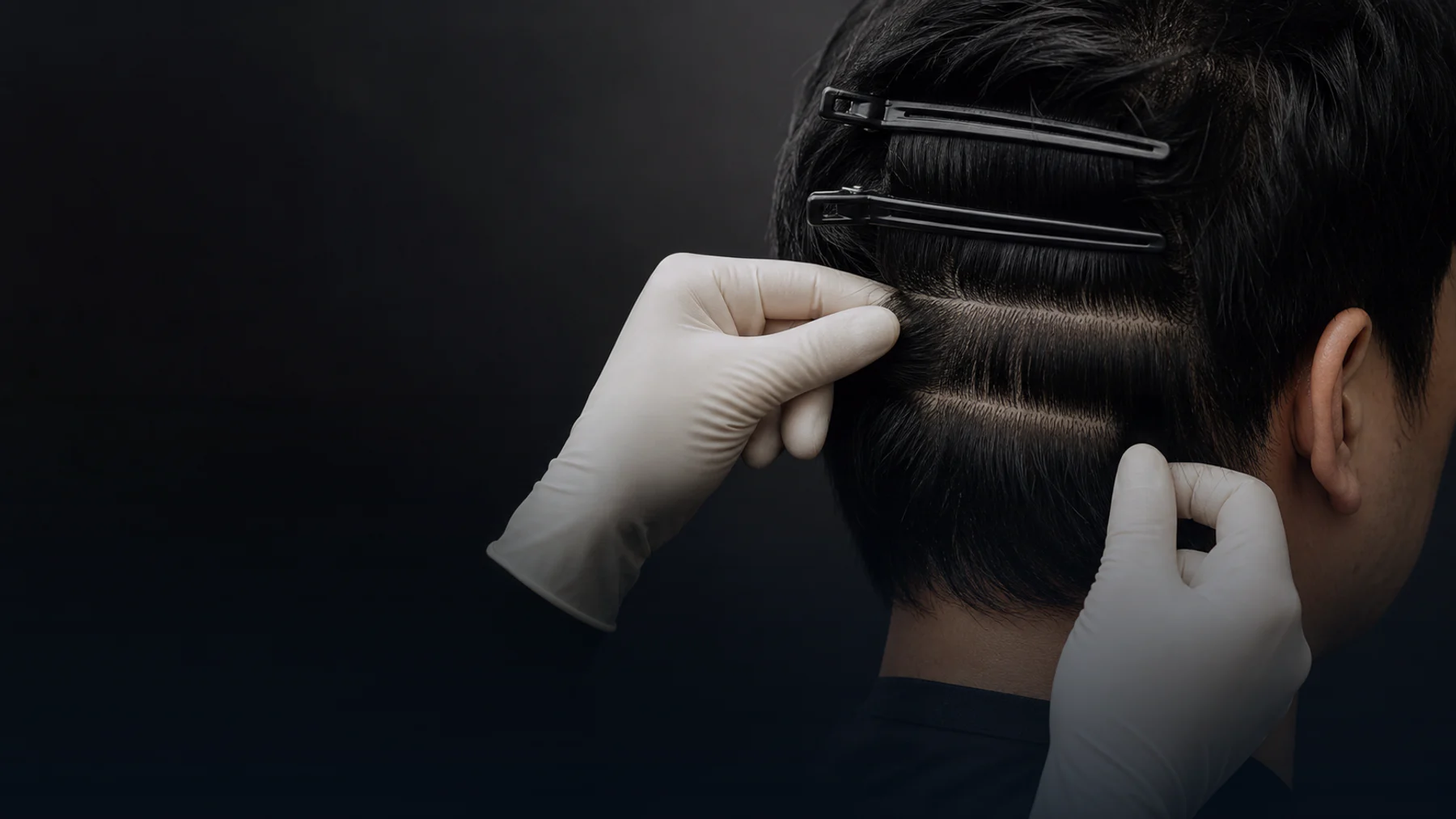
Non-shaven work is slower per graft, and that is the whole of why it costs more. The operator is working between existing hairs rather than across a clear field: each extraction has to be sited without cutting the shafts around it, and each implantation angled into a site that cannot be fully seen. The session that takes a day shaven takes considerably longer unshaven, and there is a practical limit past which placing accurately stops being possible at all.
The published Turkish figures make that limit visible. The same market that sells a shaven package covering up to 4,000 grafts prices its unshaven procedures (long-hair DHI and U-FUE) at $3,000 to $5,500 for 1,000 to 2,000 grafts. Read the two offers side by side and the constraint is explicit: the ceiling roughly halves as the price roughly doubles. A Bangkok clinic arrives at the same place by another route, quoting non-shaven at a flat THB 100 per graft, which puts 2,500 grafts at about $7,445 against its shaven FUE from about $3,040.
The planning consequence is the part to take away. If your case genuinely needs 3,000 grafts, non-shaven in a single session is probably not available anywhere, and a clinic that agrees to it without raising the ceiling is worth a second question. Splitting across two sessions is a real option; so is a partial shave, where the donor area is shaved in bands that longer hair above covers. What you should not accept is learning about the ceiling on the day.
Dr. Serkan Aygin Clinic (Istanbul) published pricing: unshaven U-FUE/long DHI at $3,000–5,500 for 1,000–2,000 grafts; Hairtran Clinic (Bangkok) published non-shaven rate of THB 100 per graft; shaven comparison from Cosmedica and Smile Hair Clinic entry packages (https://www.drserkanaygin.com/hair-transplant/cost/turkey/), measured 2026-07-28.
Who it suits
What it buys: concealment.
The reason to choose non-shaven is social rather than clinical, and that is worth stating plainly because the marketing around it often implies otherwise. Nothing about leaving the hair long makes the grafts do better. What it buys is being back among colleagues within days without a shaved head announcing the procedure, which for many men is the difference between having it done and not, and is a good enough reason on its own.
It suits smaller cases best: a receding hairline, a defined patch, a refinement to earlier work. It suits people whose existing hair is long enough to do the covering, which in practice means a few centimetres at the donor site. It suits worse if the case is large, if loss is diffuse enough that there is little length to hide behind, or if the plan already needs more grafts than one unshaven session can hold.
FAQ
Common questions about this procedure.
- Can any graft count be done non-shaven?
- No. Published unshaven offers cap at around 1,000–2,000 grafts per session, against up to 4,000 for shaven work in the same market, because placing accurately between existing hairs is slower and harder. Above that ceiling the realistic options are multiple sessions or a partial shave.
- Does non-shaven cost more?
- Yes, and roughly double is a published figure rather than a rule of thumb: $3,000–5,500 unshaven against entry packages near $2,720 shaven at Istanbul clinics, and about $7,445 against about $3,040 for 2,500 grafts at one Bangkok clinic.
- Does leaving the hair long affect how the grafts do?
- There is no evidence that it does, and this site does not claim it. Non-shaven is chosen for concealment during healing, not for a clinical advantage.